We'll be back soon
Our website is currently undergoing maintenance. Thank you for your patience.
Simulation Software Limited
The VariSim Leak Detection technology provides high accuracy, high capability leak detection on all single phase pipelines yet it is SSLs firm belief that it is much more preferable to prevent the leak occurring in the first place (the cause) rather than relying on their detection (the symptom). The causes of leaks can be many, but they can often be reduced by using the simulator based montoring functions. These functions analyse pipework that is subjected to continual over and under pressurisation and assist in calming system operation by identifying the source of transients and minimising their effects.
As a company, Simulation Software Limited has significant experience in the pipeline leak detection environment, and this has been fully exploited within VariSim to create some of the best leak (and theft) detection approaches for liquid and gas systems. Our systems expand the capabilities of the two principal software-based methodologies that analyse the physical reaction to a leak in the pipeline.
VariSim uses balancing techniques to detect seeping leaks over extended timeframes, while pressure monitoring techniques detect large leaks very quickly. It makes sense to combine these effects to ensure the full range of leak detection capability. Although the physical reaction to a leak will never change, the way that the physical reaction is interrogated can always be improved.
VariSim uses balancing techniques to detect seeping leaks over extended timeframes, while pressure monitoring techniques detect large leaks very quickly. It makes sense to combine these effects to ensure the full range of leak detection capability. Although the physical reaction to a leak will never change, the way that the physical reaction is interrogated can always be improved.
The presence of responses indicates an unexpected disturbance in the pipeline or an inconsistency in the systems’ calculations. Advanced methodologies are employed by the leak detection process to detect the presence of a true leak without raising false leak alarms. The methodologies include traditional filter and threshold comparison methods, statistical analysis methods and more recently, the application of artificial intelligence processes that self learn the pipelines’ behaviour.
The E-RTTM method extracts the change in the inventory from the simulator and uses it to correct the imbalance between flow meter locations.
The imbalance (termed the IMB response) = Qin – Qout – Inventory change and should ideally be zero when there is no leak in the pipeline – even under transient conditions. In addition, at each flow and pressure measurement location, a response is calculated (the difference between the measured and calculated flow (UF) or pressure (UP). The responses are analysed using statistical techniques to determine the presence and magnitude of a leak and once established, a neural net based pattern recognition process verifies the signature responses (UP and physical pressure measurement) to determine if the leak is true.
Leak location is established using the hydraulic gradient methodology and the neural net based pattern recognition process.The complete solution is termed Intelligent Leak Detection based on the E-RTTM method
Simulation Software Limited has significant experience in the field of pipeline leak detection and this has been fully exploited to create some of the best software based leak detection approaches for liquid and gas systems. The VariSim Leak Detection technology using the E-RTTM (extended real time transient modelling) method provides high accuracy, high capability leak detection on all single phase pipelines and conforms to the requirements of API 1130. Our systems have been routinely installed on liquid pipelines and gas pipelines including offshore pipelines where instrumentation possibilities are limited to offshore platforms.The methodology expands the capabilities of the two principal software-based methodologies that analyse the physical reaction to a leak in the pipeline.
Balancing techniques can detect seeping leaks over extended timeframes and the monitoring of leak reaction can detect larger leaks very quickly. It therefore makes sense to combine these effects to ensure the full range of leak detection capability.
The benefits of VariSims accuracy in conjunction with the E-RTTM methodology are gained on pipelines with transient conditions, variable product properties or changing flow regimes (including slack line conditions) and compressible fluids. If the pipeline is transporting gas, the E-RTTM approach will always be used to accommodate for the highly compressible nature of the gas.
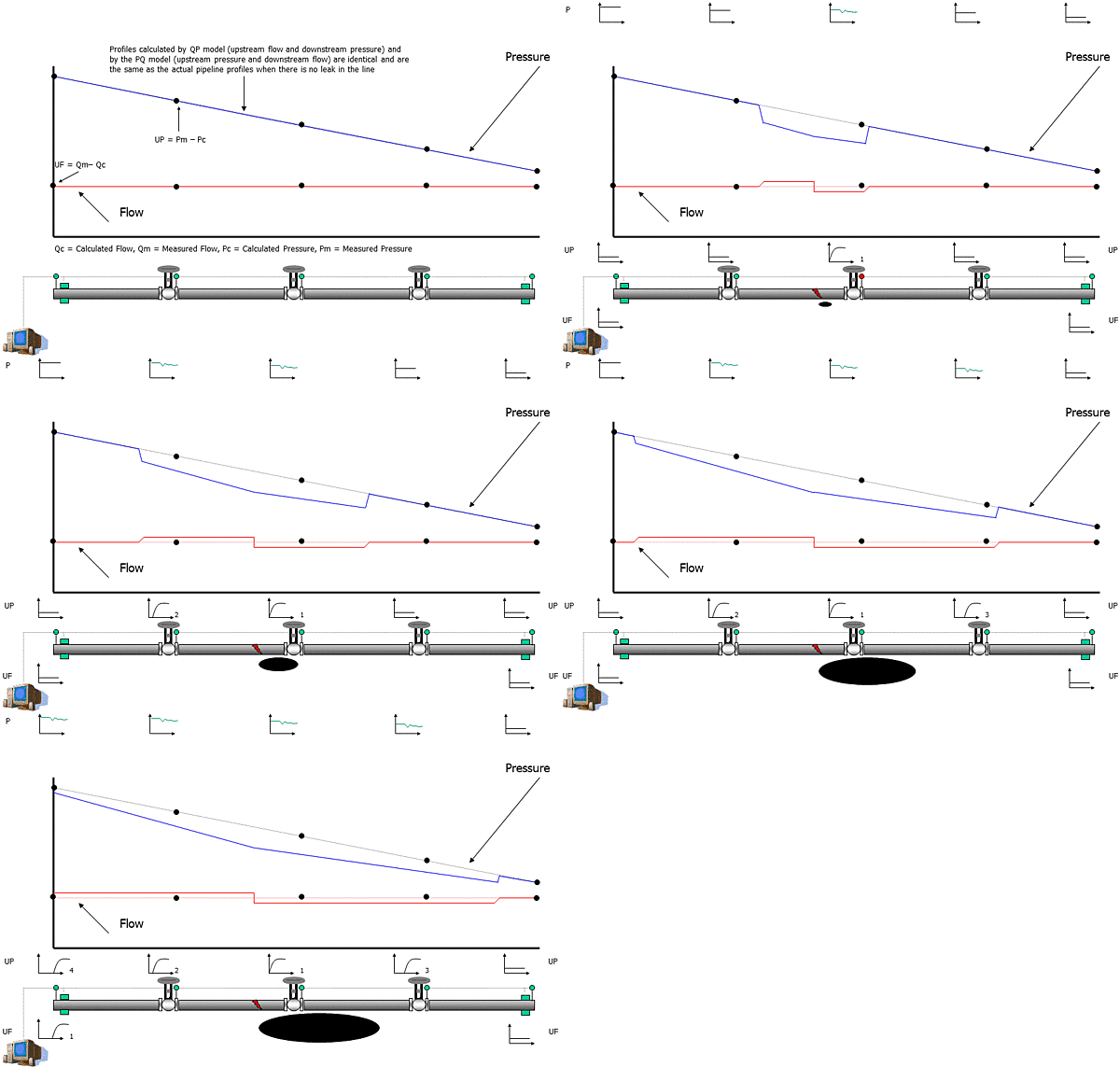
Accurate detection of leaks is essential but it is much more preferable if they are prevented.
Leaks in pipelines often develop when high surge pressures are generated in the pipeline, particularly when such surge pressures are repeatedly experienced in the same location. VariSim can monitor the pipeline pressures against the MAOP of the pipeline and generate alarms for the operator each and every time over/under-pressurisation occurs. It is then possible to assess the frequency of the alarms and the location in which over-pressurisation occurs and following an engineering review, the source of the surges can be identified and measures taken to prevent them surge pressures occurring.
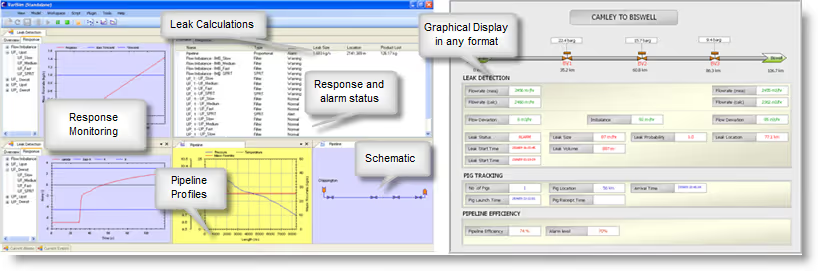
Output from the leak detection process includes the leak size, volume lost and the location of the leak that are calculated using advanced methods appropriate to the pipeline or network geometry.
The leak detection process resides as a plug-in in VariSim and uses all the familiar and powerful viewing capabilities of the VariSim environment. Data from the leak detection process can also be exported to VariView for SCADA style graphical display or to the SCADA system itself.

Our website is currently undergoing maintenance. Thank you for your patience.
Simulation Software Limited